
The Buyer–Supplier Collaboration Dilemma
When collaboration builds resilience, and when it becomes a vulnerability
Supply chains are facing more frequent disruptions, greater uncertainty, and increasing pressure to become more resilient.
One recommendation comes up again and again: work more closely with your suppliers and customers.
But does closer collaboration always make a supply chain more resilient?
Trust, information sharing, and strong relationships can help companies respond faster, solve problems together, and secure access to critical resources. At the same time, relationships can become too close. Firms may become dependent on one another, stop looking for alternatives, face growing coordination costs, or find that one partner carries more of the risk than the other.
So where is the right balance?
An international research team from Esade Business School (Spain), Kühne Logistics University (Germany), and the University of Groningen (the Netherlands) is conducting a study to answer a practical question:
When does buyer-supplier collaboration strengthen performance and resilience, and when does too much collaboration start to work against the firm?
Why this study matters
Companies invest a great deal of time and effort in building strong relationships with important suppliers and customers. During disruptions, these relationships can be particularly valuable, especially when alternative sources of supply are difficult to find.
But closer collaboration is not always better.
Its value may depend on how much trust, interaction, information sharing, and dependence exist in the relationship. It may also depend on whether both sides actually benefit in the same way.
Most previous research has looked at these relationships from only one side, usually the buyer.
Our study takes a different approach. We collect information from both buyers and suppliers so that we can examine the same relationship from two perspectives. This helps us understand whether collaboration creates value for both parties, or whether the benefits and risks are experienced differently.
The project aims to collect at least 115 matched buyer-supplier relationships in Spain.
The project has been approved by the Journal of Supply Chain Management (JSCM), one of the leading international academic journals in the supply chain management field.
What will participating companies receive?
We want the project to be useful for the companies that take part, not just for academic research.
Participants will receive:
- A benchmarking report showing how their company compares with other firms in their sector.
- Priority access to exclusive executive training on supply chain resilience and supply security.
- Early access to the findings of the study and their practical implications for procurement, sourcing, supplier management, and resilience.
- The opportunity to contribute to international research on how companies can build stronger and more resilient buyer-supplier relationships.
Executive training
The executive training is planned for Barcelona and Madrid, with hybrid participation also possible.
The sessions will focus on practical questions such as:
- How should firms manage dependence on powerful suppliers or buyers?
- What can companies do when changing suppliers or diversifying the supply base is not realistically possible?
- When does closer collaboration improve resilience?
- When can collaboration create dependency, lock-in, or additional risk?
- How can firms strengthen supply security when their strategic options are limited?
What does participation involve?
Participants will answer questions about a specific relationship with an important buyer or supplier. The research team may then invite the corresponding company to participate as well
This allows us to study the same buyer-supplier relationship from both sides, rather than assuming that buyers and suppliers experience the relationship in the same way.
Your responses are confidential
All responses will be treated as strictly confidential and used exclusively for academic research in accordance with the Esade-Ramon Llull University Code of Research Ethics.
No company or individual participant will be identifiable in any report, presentation, or publication.
Individual responses will not be shared with your buyer, supplier, or any third party.
The research team

Frank Wiengarten
Full Professor of Operations, Innovation and Technology Management at Esade Business School
His research examines buyer-supplier relationships, supply chain collaboration, information technologies, sustainability, and operations and supply chain management

Tri Mikael Tran
Associate Professor of Logistics and Management at Kühne Logistics University (KLU)
Research Director of KLU Asia and Visiting Researcher at Esade Business School. His research focuses on buyer-supplier relationships, supply security, supplier dominance

Dirk Pieter van Donk
Full Professor of Operations Management at the University of Groningen
An internationally recognized scholar in supply chain management, integration, and resilience. He is a Fellow of the European Operations Management Association (EurOMA), recognizing his contributions to the field and to the European operations management community
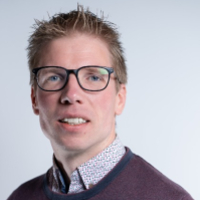
Thom de Vries
Associate Professor at the University of Groningen
His research examines collaboration within and between organizations, resilience, adaptability, and responses to disruptions. His research has appeared in leading international journals including the Academy of Management Journal, Journal of Applied Psychology, Journal of Management, and Journal of Supply Chain Management
How much collaboration is enough?
Companies are often told that stronger relationships create stronger supply chains.
We want to find out when that advice is right, and when it is not.
By participating, your experience can help us build better evidence on how companies should manage collaboration, dependence, sourcing, and resilience in an increasingly uncertain supply environment.
For questions about the project, please contact: campo.supplychain@esade.edu